The Story Behind the Strings.
With Nadine Mhanna
August 2026 · 3 min read
About this episode
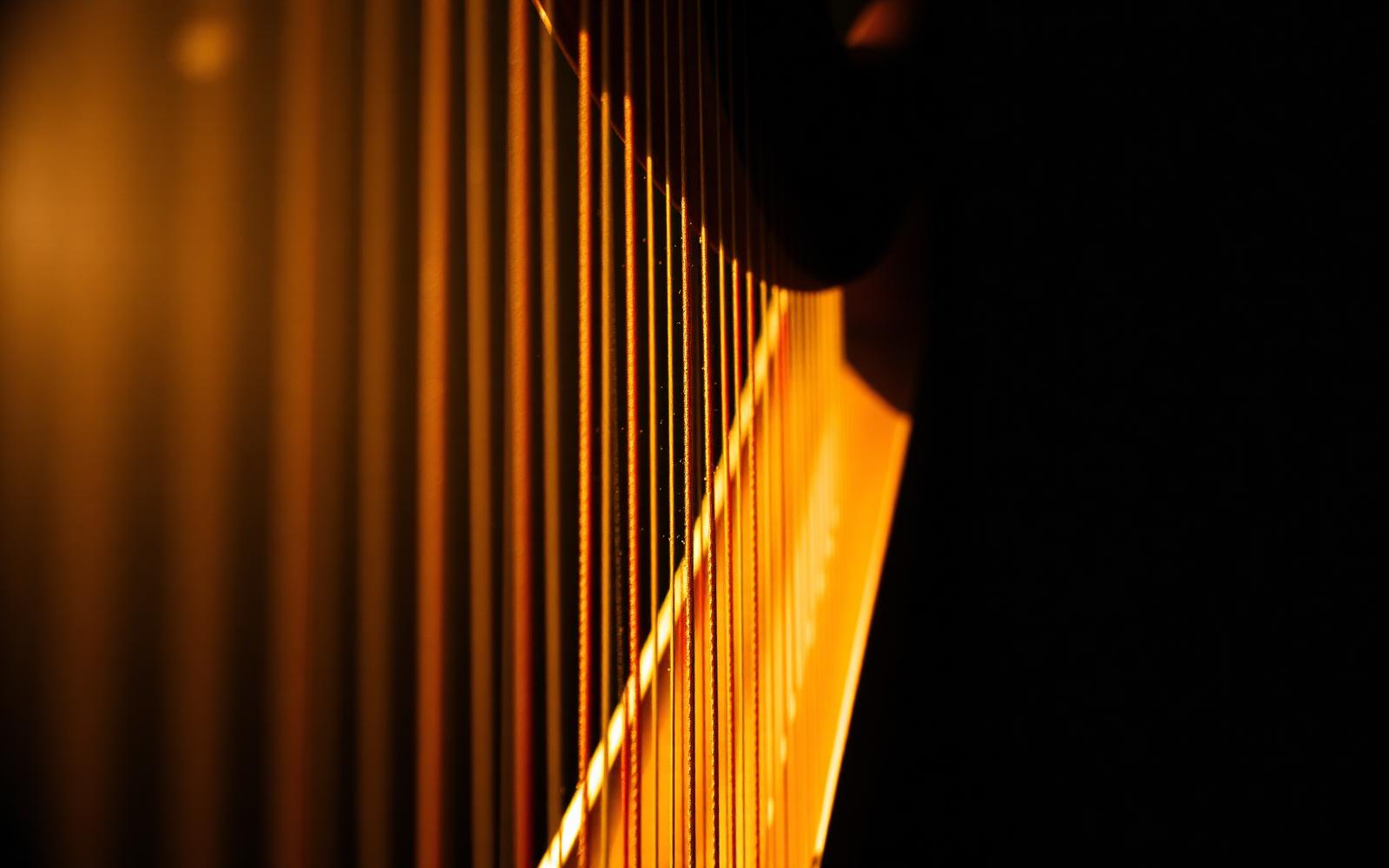
Where is the harp really from? Most people answer Greece, or somewhere vaguely European. The instrument's story runs back thousands of years, and some of the earliest depictions are found in ancient Egypt and the Middle East. Nadine Mhanna has spent a good part of her career explaining this, and this episode is about why the correction matters.
We talk first about the instrument: its size, its impracticality, its expense, the physical relationship a harpist develops with an object that cannot be carried casually anywhere. Then about the decision. Choosing the harp in Lebanon is not choosing a career path with a template. There is no obvious sequence of teachers, orchestras and opportunities waiting; she had to assemble one.
The conversation opens into identity. Nadine talks about being read as European by association, about the assumption that classical music belongs elsewhere, and about the quiet reclamation involved in placing the instrument's origins back in this part of the world. It is not defensiveness. It is accuracy, and accuracy turns out to be part of belonging.
We also talk about passion, and she is refreshingly unsentimental. The love of the instrument does not remove the hours, the isolation of solo practice, or the economics of being a specialist in a small market.
Sometimes what we think we know is only part of the story. That applies to the harp, and to most of what we assume about where things and people come from.
This episode covers
- Where the harp really comes from
- Choosing an uncommon instrument in Lebanon
- Identity through sound
- The misconceptions people bring to classical music
Reflection prompts
Three questions to sit with after listening. There are no right answers.
- 1.Which version of yourself do you perform most often, and who is it for?
- 2.Whose ambition are you living out, yours or someone else's?
- 3.Which rule from the way you were raised do you still follow without thinking?
Topics
Chapters
- 00:00Where the harp actually comes from
- 07:30Choosing an uncommon instrument in Lebanon
- 15:00The practical life of a harpist
- 22:45Misconceptions about classical music here
- 30:30Identity, origin and belonging
- 38:00What she is working on now
Some of the earliest depictions of the harp are from Egypt and the Middle East, not Greece.
There was no path to follow here. I had to build one.
What we think we know is usually only part of the story.
About the guest
Nadine MhannaLebanese harpist
Nadine Mhanna is a Lebanese harpist who chose an instrument most people in the region never encounter in person, and built a career around it. She is as interested in the harp's history as in its repertoire, and she has spent years correcting a common assumption about where it comes from. She talks about passion, identity, and what it costs to take an uncommon path in Lebanon.
Clips from this episode
Questions this episode answers
Where does the harp originate?▾
Not in Greece, despite the association. Some of the earliest known depictions of harps appear in ancient Egypt and the wider Middle East, thousands of years ago. Nadine treats this as a matter of accuracy rather than argument, and as a small correction with cultural weight.
What is it like being a harpist in Lebanon?▾
Solitary and improvised. There is no established pipeline of teachers, ensembles and engagements, so she built her own route. The instrument's cost, size and maintenance add practical difficulty that most musicians here do not have to plan around.
Why does the instrument's origin matter to identity?▾
Because assumptions about where art belongs shape who feels entitled to make it. Placing the harp's history back in this region changes the conversation from adopting a European tradition to continuing a much older regional one.
Is classical music accessible to audiences in Lebanon?▾
More than people expect, in her experience. Nadine describes audiences who arrive assuming the music is not for them and leave having connected with it. The barrier she encounters is expectation rather than taste.
Sharing to an Instagram story? Copy the link, add a link sticker and tag @inner_narratives_podcast.
If this stayed with you.

Change Without Waiting.
With Samar Hawa

One Person. One Idea. A Lasting Impact.
With Lisa Sofian
The Strength of the Human Spirit.
With Jihane Boustany Khoury
The Weight of Vision.
With Nadim Messihi

The Weight We Don't Show.
With Dr. Jase Moussa-Inaty
After the Explosion.
With Joelle Choueiry